Process
Thermal Direct Joining – The hyJOIN® Process
hyJOIN® thermal direct joining – also known as thermal hybrid joining – is our core IP and technology. It enables precise, durable, and recyclable connections between metal and plastic without adhesives or additional materials. By combining laser-based surface preparation, precise component fixation, electromagnetic induction, and controlled pressing, hyJOIN® delivers a fast, automated, and sustainable joining process that redefines the possibilities of lightweight design.
Laser Remote Structuring of Metal Component
With laserTREAT®, the metal surface is prepared using laser remote structuring (LRS). This creates a defined microstructure that enhances bonding strength and ensures long-term stability. An integrated cleaning system guarantees optimal surface conditions before joining.
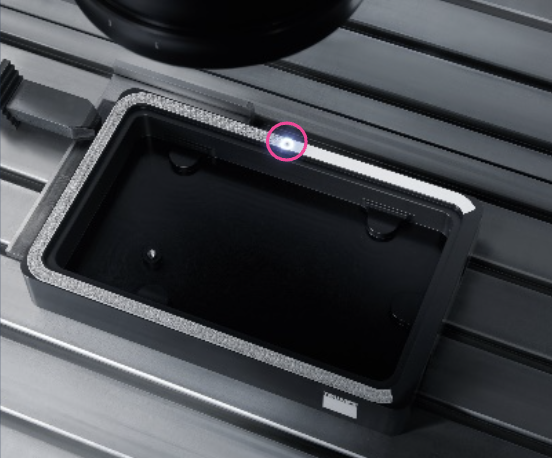
Component Fixation
The plastic and metal components are precisely positioned in the varioJOIN® or giroJOIN® systems using dedicated part holders and joining tools. Secure fixation ensures reproducibility and allows flexible handling, either manually or fully automated with robotic systems.
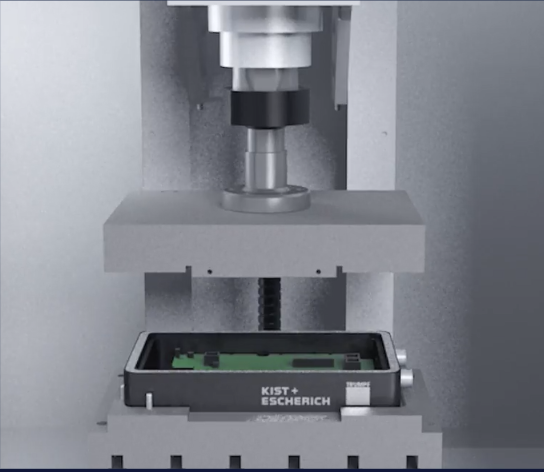
Electromagnetic Induction and Pressing
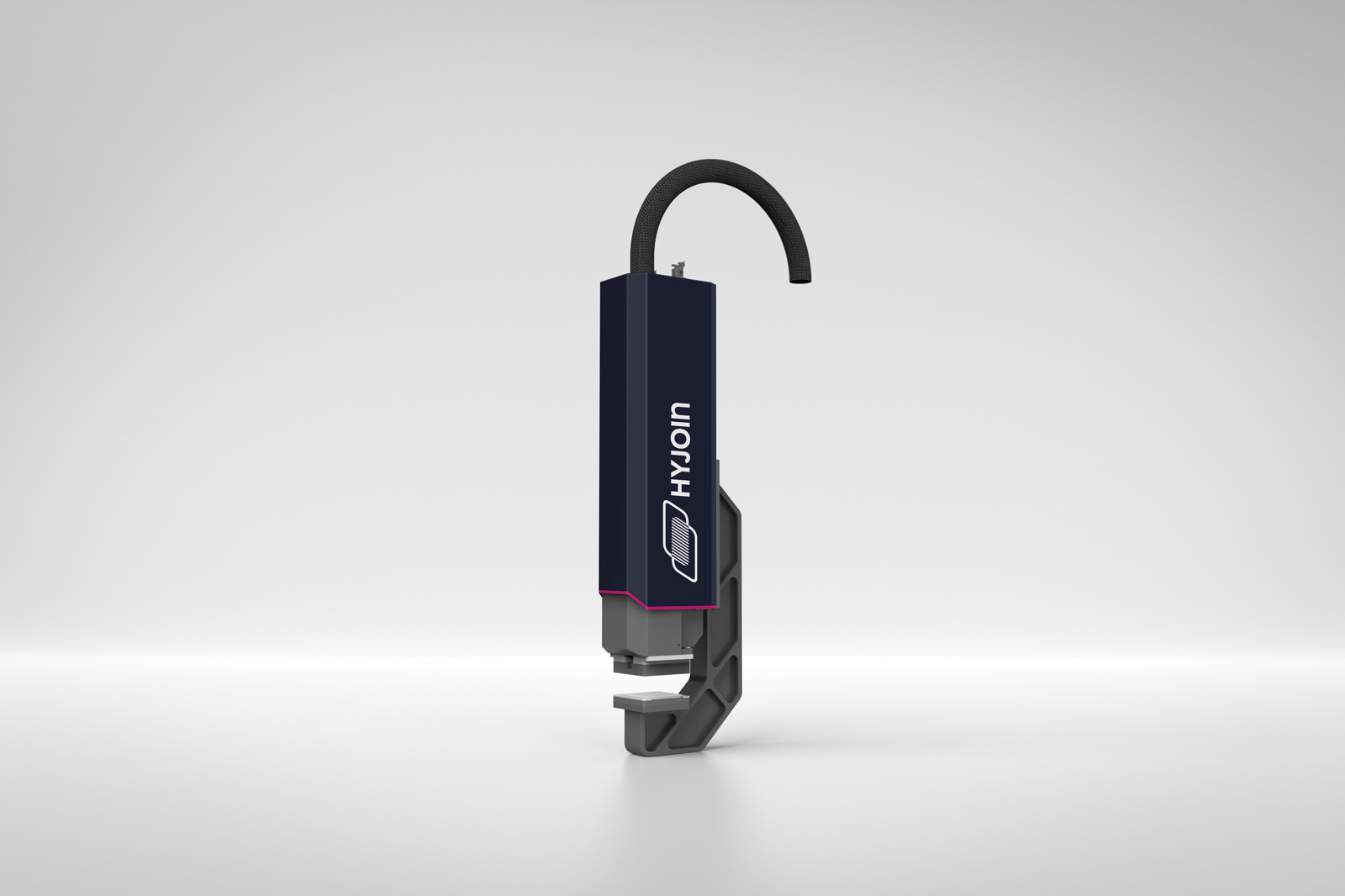
At the heart of the process is the coreJOIN® module in combination with coreSUPPLY® units. The inductor embedded in the joining die generates a concentrated electromagnetic field, inducing eddy currents in the metal. The metal heats rapidly and locally, softening the plastic at the interface. Controlled pressing ensures intimate contact and reliable bonding.
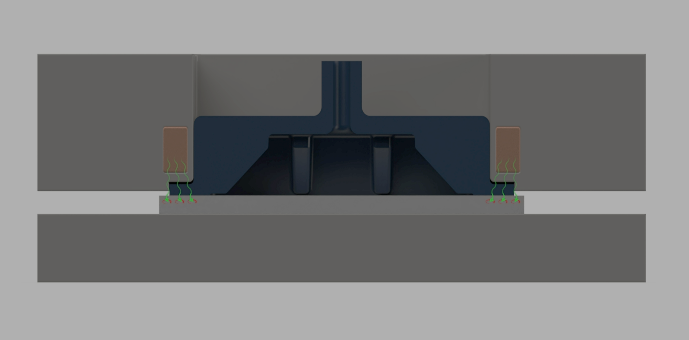
Joined Component
After passive cooling, the result is a solid metal-plastic hybrid joint – strong, media-tight, and fully recyclable. The joined component can be directly removed from the system or passed on within a fully automated line such as atroJOIN®, enabling efficient series production.
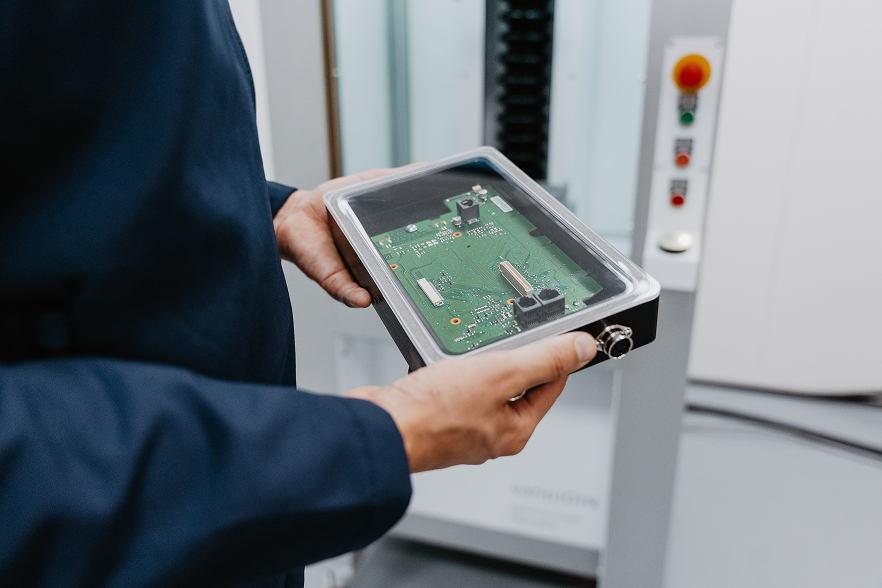
This is how a hyJOIN® connection is made - from fixation to finished joint, in under a minute.
Any metal joined with any plastic
HYJOIN® enables durable and recyclable hybrid connections across a broad material spectrum – from commodity plastics to high-performance polymers, and from lightweight metals to advanced alloys. Plastics can be applied in unreinforced, filled, or reinforced grades, while metals are available from various manufacturing processes such as extrusion, casting, forging, or additive manufacturing.
Performance Highlights
- Strength: 15–30 MPa (tested according to DIN EN 1465)
- Aging stability: confirmed according to PV1209 (commonly used in automotive validation)
- Media tightness: up to 30 bar (depending on material combination)
Plastics (ranked by performance level)
Each class can be used as unreinforced, filled, or reinforced, offering maximum flexibility in stiffness, thermal stability, and strength.
Metals (ranked by performance & lightweight potential)
Metals can be produced via extrusion, casting, forging, 3D printing, or sintering, with properties tailored to specific applications.
Key advantages

High Performance Joining
Media Tight Connections
Cost Efficient Process
Aging Resistance
Lightweight Design
Fully Recyclable
Your product with
our solution
Automotive & Mobility
Battery housings & modules (e-mobility), Body & structural components, Interior/exterior parts (handles, consoles, trims)
Consumer Goods & Household
Household appliances (coffee machines, refrigerators, washing machines), Power tools (drills, mixers, garden tools), Sports equipment (bicycle components, fitness gear, outdoor equipment)
Electronics
Connectors & interfaces, Sensor and actuator housings, Thermal management, and cooling solutions (heat sinks with plastic housings)
New Energy
Battery modules & packs, Hydrogen systems (tanks, valves, pipelines), PV & wind components (housings, structural elements)
Healthcare / Medical
Medical device housings (pumps, analyzers, scanners), Sterile instruments (reusable & recyclable), Implant-related components
Aerospace & Defense
Cabin & interior components, Structural parts (titanium-plastic hybrids), Electronic housings (avionics systems)
Industrial Solutions
Pumps & valves, Machine & drive housings, Functional modules for industrial systems
(Any) industry
These are just examples. Our solutions adapt to countless industries wherever plastic and metal need to be joined.
Frequently Asked Questions
What is thermal direct joining?
Thermal direct joining (also called thermal hybrid joining) is a manufacturing process that bonds metal and thermoplastic components without adhesives, screws, or additional fasteners. The metal is heated by induction, causing the plastic to melt at the contact surface and form a durable hybrid joint upon cooling. HYJOIN GmbH's implementation of this process is called hyJOIN®.
How does the hyJOIN® process work step by step?
The hyJOIN® process has four steps:
- Pre-treat: The metal surface is structured using laserTREAT® laser remote structuring (LRS),creating a defined microstructure that maximizes performance.
- Fix: Metal and plastic components are precisely positioned in the joining system (varioJOIN®,giroJOIN®, or atroJOIN®) using dedicated part holders.
- Heat & press: The coreJOIN® module generates a concentrated electromagnetic field thatinduces eddy currents in the metal. The metal heats locally, melting the plastic at theinterface. Controlled pressing ensures reliable, reproducible contact.
- Cool & complete: After passive cooling, the result is a solid, media-tight metal-plastic hybridjoint ready for further processing or series production.
How long does a hyJOIN® joining process take?
A single hyJOIN® joint is completed within a few seconds. The exact cycle time depends on thematerial combination, joint area, and system configuration. For high-throughput applications, thegiroJOIN® rotary table system and atroJOIN® robotic cell enable parallel processing of multiplejoints, significantly reducing overall cycle time.
What joint strength does hyJOIN® achieve?
hyJOIN® achieves lap shear strengths of 15–30 MPa, tested according to DIN EN 1465. Jointquality is comparable to structural adhesive bonding but without adhesives, cure time, orconsumable costs. Aging stability has been confirmed according to PV1209 (automotivestandard). Media tightness up to 30 bar has been demonstrated, depending on materialcombination.
What metals and plastics are compatible with hyJOIN®?
hyJOIN® is compatible with a broad material spectrum:
- Metals: Aluminum (Al), Steel/Iron (Fe), Titanium (Ti), Magnesium (Mg), Copper (Cu), Brass —produced via extrusion, casting, forging, sintering, or 3D printing.
- Thermoplastics: High-performance polymers (PAEK, PPS, PPA, PC, TPU), engineeringpolymers (PA6, PA66, PA12, PBT, POM), and commodity polymers (PP, PE) — in unreinforced,filled, or reinforced grades.
Can hyJOIN® joints be separated and recycled?
Yes. hyJOIN® joints are re-separable with minimal damage to both components. The sameinductive heating principle used for joining can be applied in reverse to separate the bond. Thisenables repair, remanufacturing, and end-of-life material separation — supporting compliancewith the EU End-of-Life Vehicle (ELV) directive and the Ecodesign for Sustainable ProductsRegulation (ESPR). Because no adhesives or additional materials are used, separatedcomponents are material-pure and can be directly recycled.
How is hyJOIN® different from adhesive bonding?
hyJOIN® differs from adhesive bonding in five key ways:
- No consumables: hyJOIN® requires no adhesive, primer, or activator — eliminating materialcosts and supply chain dependencies.
- Faster process: Joining is complete in seconds; adhesives require mixing, application, andcuring time (often hours).
- Re-separable: hyJOIN® joints can be undone; structural adhesives are typically permanent.
How does hyJOIN® compare to screwing and mechanical fastening?
- Eliminates holes, threads, and fastener inventory, reducing weight, installation space, andcomponent complexity
- Joints are media-tight; screwed connections often require additional sealing
- Shorter assembly time
- No metal inserts penetrate the plastic, preserving the structural integrity of the plasticcomponent